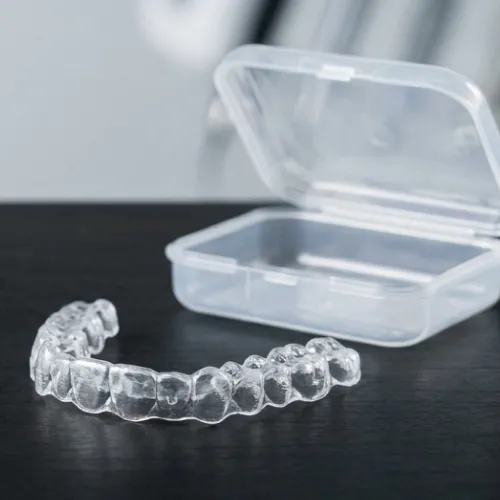
Spark vs. Invisalign: Which Clear Aligner Is Actually Better?
Spark vs. Invisalign: Which clear aligner is actually better for you? Compare costs, comfort, and results. Book your smile consultation in Richmond today!
Read More
Cosmetic Dentistry, Teeth Straightening
Medically Reviewed by Dr. Ali Tameemi
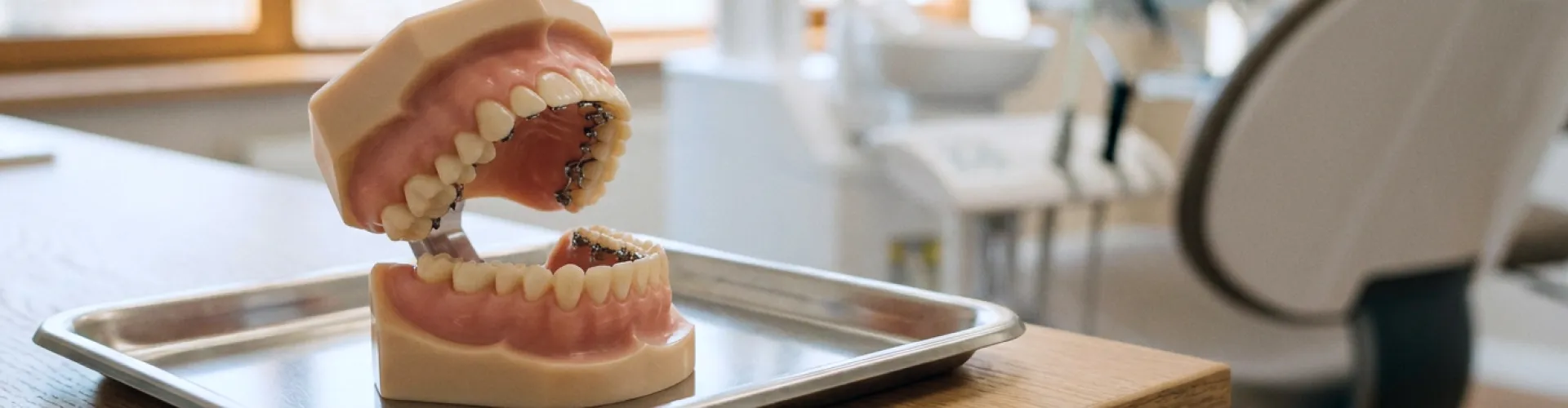
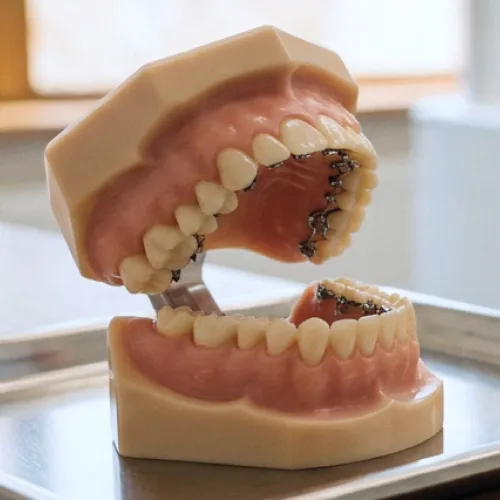
Lingual braces are mounted behind your teeth, making them nearly invisible — but supply-side scarcity, specific anatomical disqualifiers, and real phonetic drawbacks mean they're not the right choice for everyone. Understanding the full picture before your consultation can save you months of frustration.
If lingual braces are invisible and effective, why do so few orthodontists offer them? The honest answer has less to do with patient suitability and more to do with what happens on the doctor's side of the chair.
Adjusting lingual braces requires an orthodontist to work from behind and below your teeth — essentially operating upside down using mirrors in a cramped space. Over a full patient schedule, this posture creates significant neck and back strain. Clinicians in the field often refer to this as the "ergonomic tax" of lingual treatment, and it's one reason many practices quietly steer patients toward Invisalign or standard labial braces instead.
The lab workflow adds another layer of complexity. Premium lingual systems like 3M Incognito use custom-cast brackets manufactured through a proprietary CAD/CAM process at specialized facilities abroad. Each bracket set is robotically bent and individually fitted to a patient's unique tooth contours. According to Healthline, this customization can shorten treatment time — but it comes with a complex laboratory chain that many general orthodontic practices aren't equipped to manage.
Research published in PMC confirms that only about 15% of U.S. orthodontic practices currently use lingual braces — a significant decline from 35% in 2015. The barriers aren't just technical difficulty; they include postural strain on the clinician, complex bonding procedures, and the steep learning curve required to master lingual biomechanics. Patients asking "why doesn't my orthodontist offer these?" often never hear this part of the conversation.
Not every smile is a candidate. But the vague phrase "severe bite issues" that appears in most articles doesn't prepare you for what disqualification actually looks like.
If you have a deep overbite — particularly a Class II malocclusion — lingual braces face a specific mechanical failure risk that's rarely explained clearly. When you close your mouth, your lower front teeth naturally press against the back surfaces of your upper teeth. With lingual brackets bonded to exactly those surfaces, the shearing force of that bite contact can physically knock brackets off. Repeatedly.
The workaround orthodontists use is called "bite turbos" — small blocks bonded to certain teeth to prevent the mouth from fully closing. This prevents bracket shearing, but it also means patients spend months unable to chew food normally. For some patients, that tradeoff is manageable. For others, it's genuinely disruptive to daily life. WebMD notes that patients with deep overbites may experience more frequent bracket loss with lingual systems, making candidacy assessment critical before committing to treatment.
Other anatomical factors that can disqualify patients include very small or short clinical crowns (not enough tooth surface to bond brackets securely), severe crowding requiring extractions, and certain skeletal jaw discrepancies that demand more precise three-dimensional force control than lingual systems can reliably deliver. To learn more about what the lingual braces treatment process involves, it helps to review the full clinical picture before your consultation.
Most articles mention a temporary lisp and move on. But for teachers, attorneys, singers, actors, or anyone whose voice is central to their work, the phonetic impact of lingual braces deserves a much closer look.
The issue isn't just general speech disruption. Lingual brackets are positioned precisely where your tongue needs to make contact to produce specific sounds. The alveolar ridge — the small bony shelf just behind your upper front teeth — is the target point for consonants like "t," "d," "l," "n," and sibilant sounds like "s" and "z." Lingual hardware physically blocks that contact point, forcing the tongue to compensate. The result is distortion of those specific sounds that persists for the duration of treatment, not just the first few weeks.
A systematic review in PMC found that lingual orthodontic treatment significantly increased the likelihood of speech difficulty compared to labial braces — with an odds ratio of 8.61. That's a meaningful difference, not a minor inconvenience.
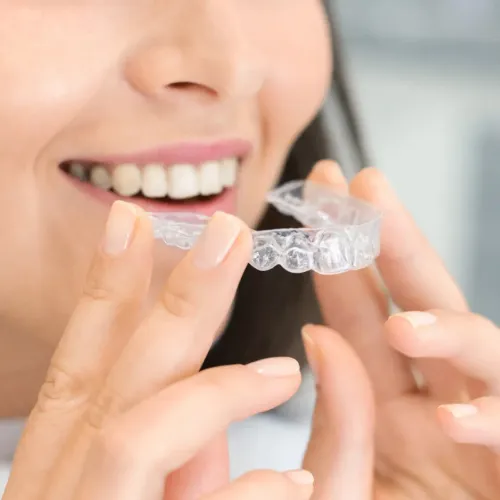
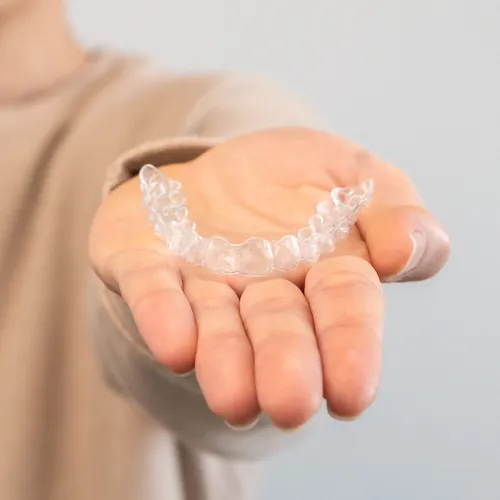
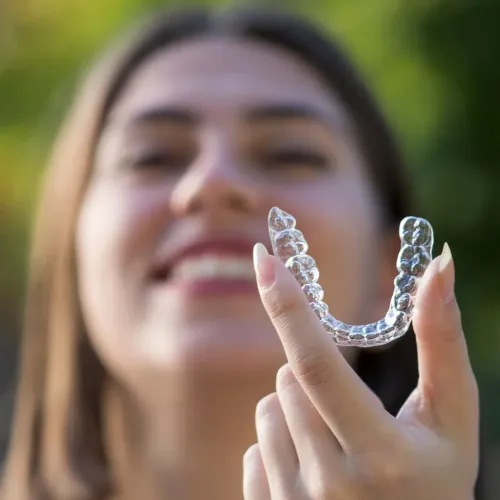
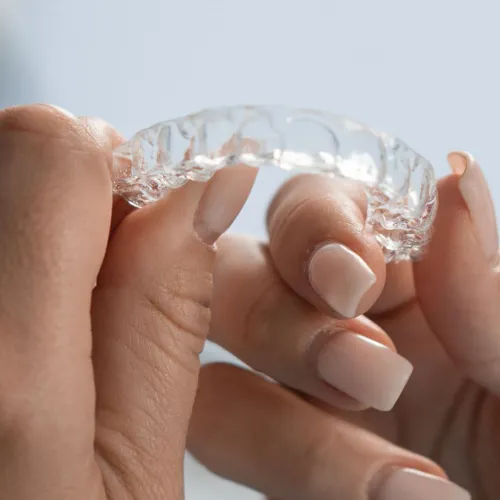
Clear aligners, by contrast, have a thin, smooth profile that sits flush against the teeth. The tongue can glide across the surface without obstruction, preserving alveolar contact and making sibilant production far less affected. For professional voice users in Richmond considering orthodontic treatment, this distinction may outweigh every aesthetic advantage lingual braces offer. If you're also exploring whether refinements are needed with Invisalign trays, that's another important factor to weigh when comparing your options.
That depends entirely on what "better" means for your life.
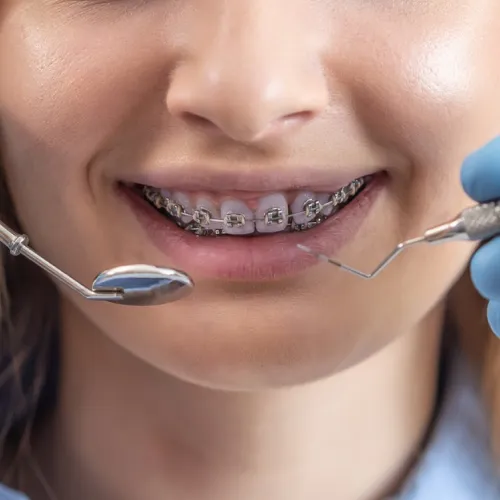
On effectiveness, lingual braces perform comparably to traditional labial braces for most alignment goals. A Healthline overview confirms that lingual braces share the same core components as conventional systems — brackets, archwires, and bonding — and achieve the same types of tooth movement. The mechanics work. The invisibility is real.
Where lingual braces genuinely win: you can't see them from the front, there's no impact on brass or woodwind instrument playing (since brackets don't contact the lips), and some research suggests lower cheek and lip pain compared to labial braces.
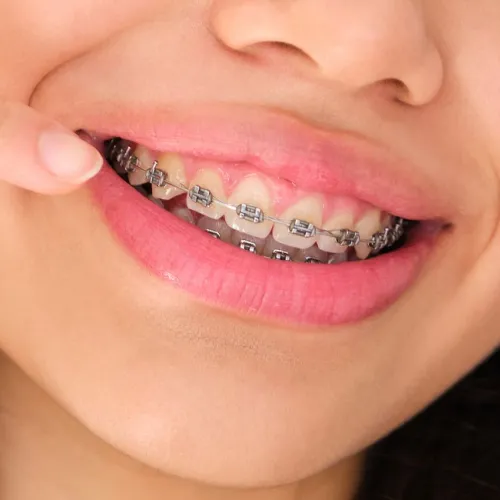
Where they fall short: tongue discomfort is higher, speech disruption is clinically significant, bracket loss risk increases with certain bite patterns, and finding a trained provider can be surprisingly difficult. Dental braces, meanwhile, offer a well-established alternative — though they require strict compliance (at least 22 hours per day) to work effectively when used in clear aligner form.
The right choice depends on your bite anatomy, your profession, your provider's expertise, and what disruptions you're willing to manage for the length of treatment.
If you're in Richmond, Texas or the Greater Houston area and weighing your orthodontic options, a proper candidacy evaluation is the only way to know which path makes sense for your specific anatomy and lifestyle. Check out our dental offer to get started, and Nu Dentistry Richmond can walk you through your options and help you understand exactly what treatment will look and feel like — before you commit.
Medical disclaimer: This article is for informational purposes only and does not constitute professional dental or medical advice. Always consult a licensed dental professional for personalized guidance regarding your oral health.



Tuesday 9-6pm
Thursday 9-6pm
Saturday 9-2pm
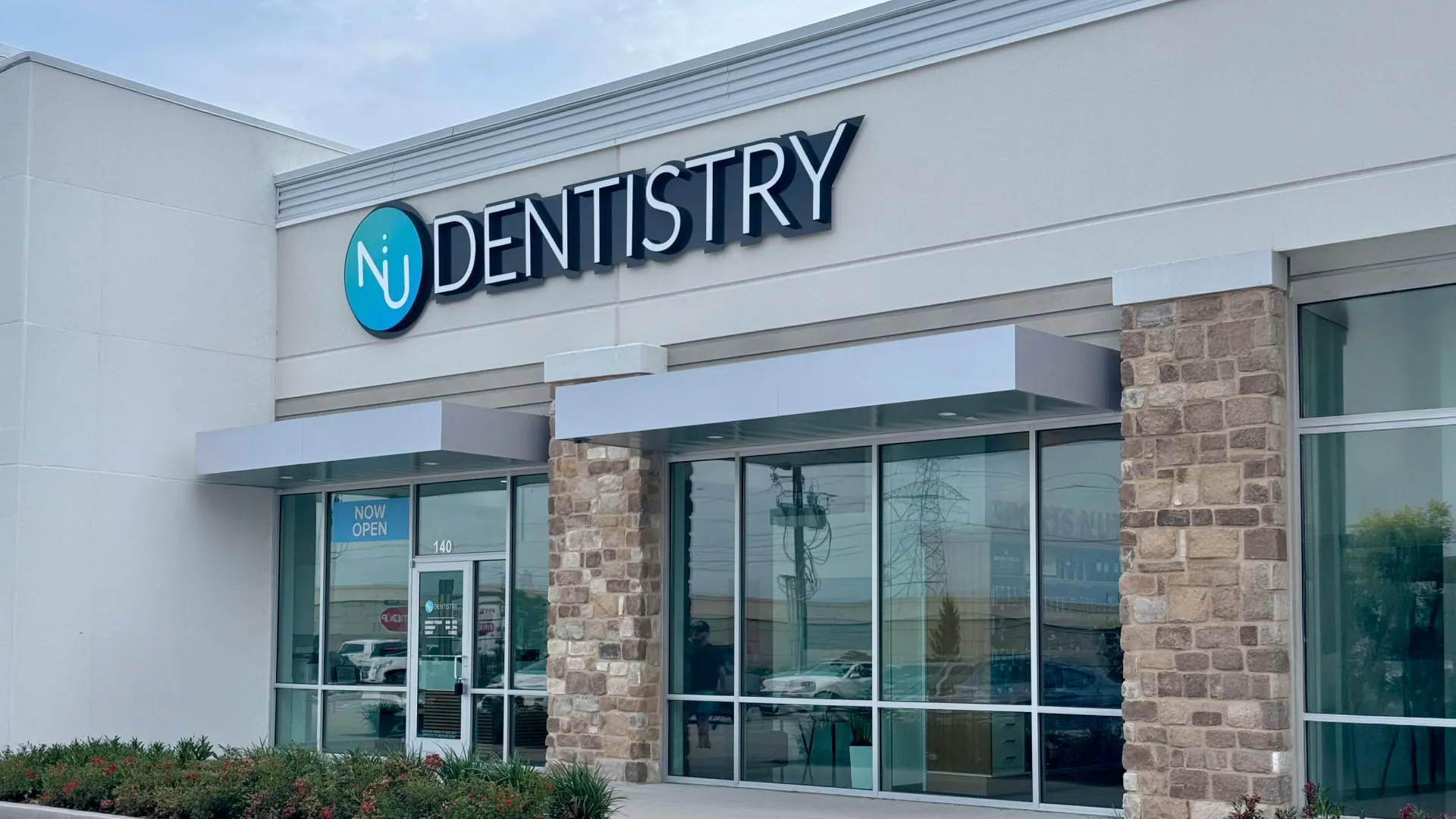
11115 W Grand Parkway S, Suite 140, Richmond, TX 77407
5706 San Felipe St Ste B-300, Houston, TX 77057
23227 Gosling Rd., Suite B, Spring, TX 77389
8940 Barker Cypress Rd., Cypress, TX 77433
3201 N. Shepherd Dr. Suite 113, Houston, TX 77018
8145 Highway 6, Building B #200, Missouri City, TX 77459
PATIENT TESTIMONIALS Richmond, TX
What People Are Saying After Visiting Us

CARING DENTISTS Richmond, TX
OUR SOCIALS
Check Us Out and Follow Our Social Media Accounts