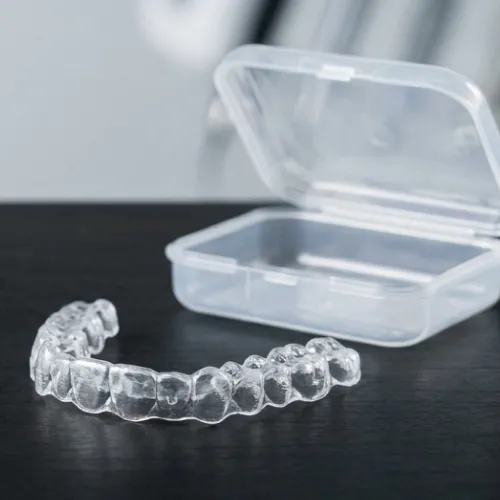
Spark vs. Invisalign: Which Clear Aligner Is Actually Better?
Spark vs. Invisalign: Which clear aligner is actually better for you? Compare costs, comfort, and results. Book your smile consultation in Richmond today!
Read More
Cosmetic Dentistry, Teeth Straightening
Medically Reviewed by Dr. Ali Tameemi
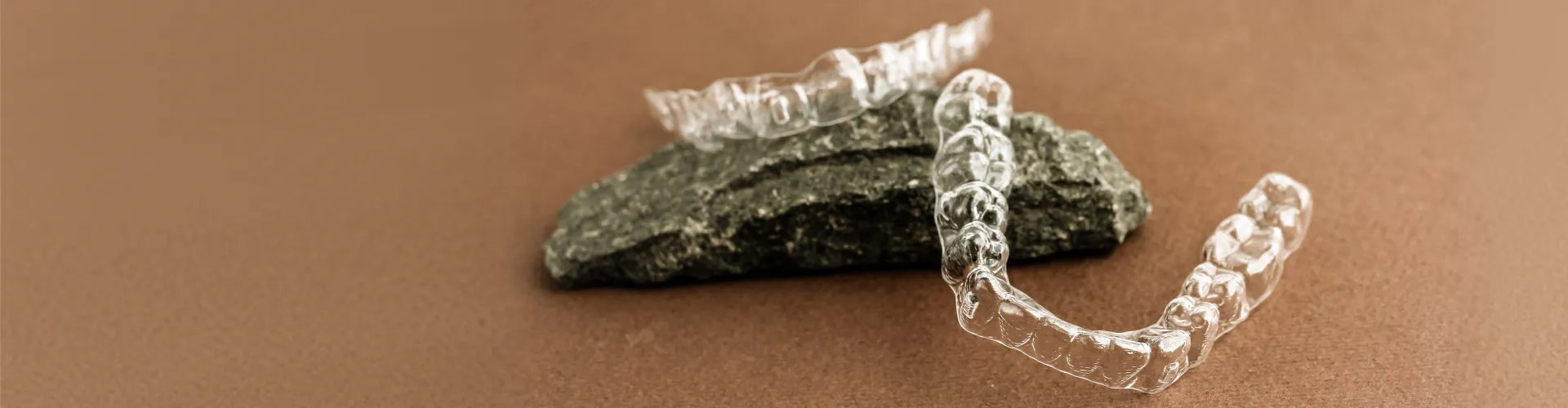
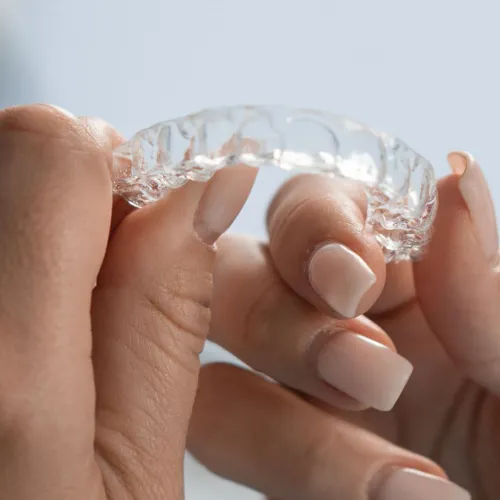
If you've ever held your Invisalign tray up to the light and noticed a gap at the bottom, you're not alone. I hear this from patients in Richmond all the time — that slight lift at the gumline, the tray that feels "off" no matter how hard you press it in. It's unsettling, especially when you're months into treatment and expecting things to feel locked in.
Here's the thing: Invisalign fit isn't as simple as it looks. There's a lot going on between your teeth, your attachments, and that thin thermoplastic shell. And honestly, a small gap doesn't always mean something's wrong — but sometimes it does. Understanding the difference matters.
In this post, I'll walk through the most common fit and tracking questions I get from patients across the Greater Houston area, including what refinements are and whether you might need them.
Look, this is probably the question I get most often. And the answer isn't always one thing.
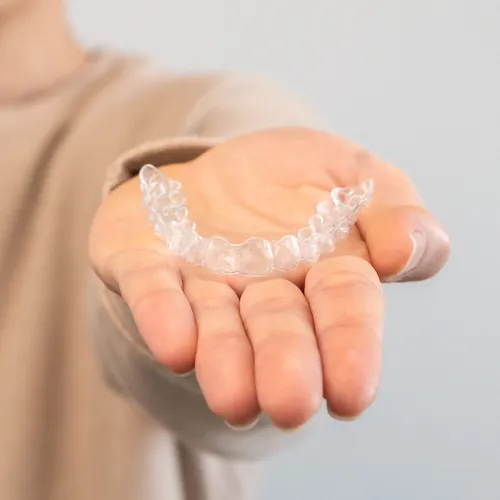
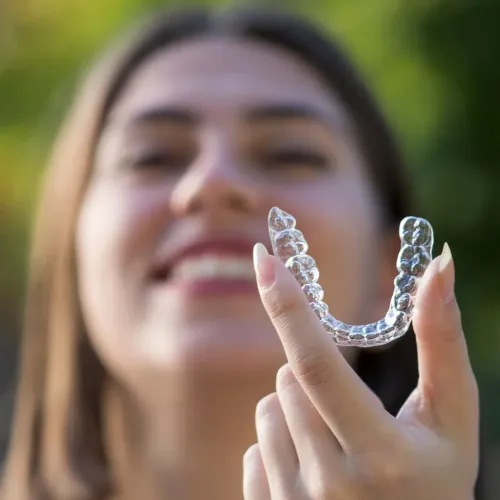
Invisalign trays are custom-made from a thermoplastic material, precision-fit to a digital scan of your teeth. They're designed to sit flush against every surface. But in practice? Research shows the average gap between an aligner and the tooth surface is around 269 micrometers — that's less than a third of a millimeter, which is normal and expected, according to a peer-reviewed study. Not visible to the naked eye.
But when you're seeing an obvious gap at the gumline or along the bottom edge of the tray, that's a different story.
The most common culprits:
Tray deformation. This one's big. Invisalign trays warp when exposed to heat — hot water, leaving them on a sunny dashboard, even running them under the tap to "clean" them. Once warped, they won't re-adapt to your teeth the way they should. I had a patient last month who couldn't figure out why her trays kept lifting at the back molars. Turned out she'd been rinsing them with hot water every morning. Simple fix, but it had set her back.
Insufficient wear time. You need 20–22 hours per day. Not 18. Not "most of the day." Studies actually show that trays adapt better and gaps reduce with consistent intraoral wear over time — but that only works if you're wearing them long enough each day.
Your teeth aren't where the tray expects them to be. This is a tracking issue (more on that next), but essentially, if a previous tray didn't move your tooth quite far enough, the next tray starts with a poor baseline. The gap you're seeing might be the tray trying to "reach" a tooth that isn't in position yet.
Attachment problems. Attachments are those small tooth-colored bumps bonded to your teeth that help the aligner grip and move specific teeth. If an attachment was placed with the wrong composite viscosity, or if it's worn down, the tray won't seat correctly.
Bottom line? Don't just push harder and hope it seals. Bring it up at your next visit — or call sooner if the gap is large.
Tracking is one of those words dentists throw around that patients nod at while having no idea what it means. Fair enough. Let me actually explain it.
Your Invisalign treatment starts with a digital plan called ClinCheck — basically a 3D animation of exactly where every tooth should be at every stage of treatment. Tracking means your actual teeth are moving in sync with that plan. When your teeth are "on track," each new tray fits snugly because your teeth are exactly where the software predicted they'd be.
When you're off-track, there's a mismatch. Your teeth didn't move as planned, so the next tray is fitting over teeth that aren't in the right position. That's when you get gaps, pressure in weird spots, or trays that just feel "wrong."
How do you know? Honestly, sometimes you don't — not without a clinical exam or a new intraoral scan. But there are signs worth paying attention to:
I'm not 100% sure why, but my theory is that patients often sense tracking problems before their dentist catches them — they just don't have the vocabulary to describe what's wrong. If something feels off, say so.
And here's a slightly controversial opinion: I think routine check-in intervals are sometimes too spread out for complex cases. Digital monitoring tools exist that can flag tracking issues between visits. Not every practice uses them, but they make a real difference.
Actually, scratch that — it depends on the complexity of your case. Simpler cases with mild crowding? Every six to eight weeks is probably fine. More complex movements like rotations or extrusion? You want more frequent eyes on it.
Invisalign's accuracy for most tooth movements sits somewhere between 80–92%, which sounds high until you realize certain movements — canine rotations, for example — can be as low as 29–46% predictable. Those are the cases where tracking goes sideways.
Refinements are additional aligner sets made after your initial series ends — or sometimes mid-treatment — to correct movements that didn't happen as planned. Think of them as a course correction.
And here's the thing most people don't know going in: refinements are extremely common. Research shows about 94% of Invisalign patients need at least one. The average patient goes through roughly 2–3 refinement rounds, and total treatment ends up running about five months longer than the original estimate.
That's not a failure. That's just how aligner therapy works.
Why do refinements happen?
Some tooth movements are simply harder to predict. Extrusions, certain rotations, and complex bite corrections don't always respond the way the software models expect. The initial plan is built on averages and algorithms — your mouth is a biological system that doesn't always cooperate.
But also? Compliance matters. If you've been wearing your trays 16 hours a day instead of 22, the teeth won't be where they need to be. Refinements can fix the gap, but they can't fix habits.
How many refinements is too many?
Evidence suggests the first refinement makes a meaningful difference — improvement rates run around 65–78% depending on case complexity. But after four or more refinements, the gains get smaller. At some point, the conversation shifts to whether additional refinements are the right path, or whether a different approach makes more sense.
Here's why planning matters from the start. Careful initial treatment planning — including building in overcorrections for tricky movements — can reduce how many refinements you'll need. Not eliminate them, but reduce them.
If you're a patient in the Greater Houston area wondering whether your treatment is wrapping up or heading toward refinements, the honest answer is: get a scan, look at where your teeth actually are, and have a real conversation with your dentist about what's realistic.
Whether your trays aren't fitting right, you're not sure if you're on track, or you've just finished your initial series and want to know what's next — we're here for it. At Nu Dentistry Richmond, we work with patients across Richmond and the Greater Houston area to make sure Invisalign treatment actually gets you where you want to go.
Don't sit on a gap or a fit issue hoping it resolves. Call us, come in, and let's take a look. Nu Dentistry Richmond is ready to help you finish strong.
This content is for informational purposes only and does not replace professional medical advice, diagnosis, or treatment. Always consult with a qualified healthcare provider.






Tuesday 9-6pm
Thursday 9-6pm
Saturday 9-2pm
11115 W Grand Parkway S, Suite 140, Richmond, TX 77407
5706 San Felipe St Ste B-300, Houston, TX 77057
23227 Gosling Rd., Suite B, Spring, TX 77389
8940 Barker Cypress Rd., Cypress, TX 77433
3201 N. Shepherd Dr. Suite 113, Houston, TX 77018
8145 Highway 6, Building B #200, Missouri City, TX 77459
PATIENT TESTIMONIALS Richmond, TX
What People Are Saying After Visiting Us




CARING DENTISTS Richmond, TX
OUR SOCIALS
Check Us Out and Follow Our Social Media Accounts