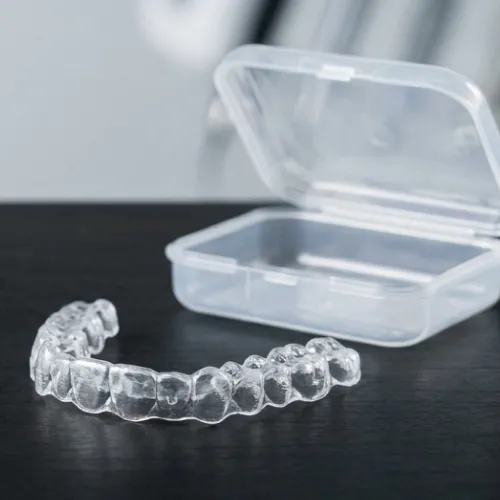
Spark vs. Invisalign: Which Clear Aligner Is Actually Better?
Spark vs. Invisalign: Which clear aligner is actually better for you? Compare costs, comfort, and results. Book your smile consultation in Richmond today!
Read More

Cosmetic Dentistry, Teeth Straightening
Medically Reviewed by Dr. Ali Tameemi
Invisalign works for a wide range of ages, but the right candidacy depends on bone biology, compliance habits, and case complexity. This guide breaks down what actually changes across age groups — including some factors most articles skip entirely.
Adult demand for clear aligners has surged, and for good reason. A Healthline overview of Invisalign confirms the aligners work by applying steady pressure through a series of custom thermoplastic trays, shifting teeth gradually toward proper alignment. For adults who missed out on orthodontic treatment during childhood, Invisalign offers a discreet path to a corrected bite.
But adult treatment carries nuances that younger patients rarely face.
Bone density changes everything. Adult jawbones are fully formed and denser than adolescent bone. Tooth movement still happens — it just requires more time because bone remodeling is slower. The cellular process works like this: osteoclasts break down bone on the pressure side of a moving tooth, while osteoblasts rebuild it on the tension side. Repeat that cycle across dozens of trays, and teeth migrate into alignment.
Here's where an underreported risk matters: older adults taking bisphosphonates (medications like Fosamax prescribed for osteoporosis) may experience significantly altered treatment. These drugs inhibit osteoclast activity — the exact mechanism Invisalign depends on. When osteoclasts can't efficiently resorb bone, teeth resist movement, aligners may fail to track properly, and in rare cases there is increased risk of jaw complications. Any orthodontist treating patients over 50 should screen specifically for bisphosphonate use before treatment begins. This conversation is non-negotiable.
WebMD notes that one in three orthodontic patients is an adult, and that clear aligners can absolutely deliver results at any age — provided pre-existing dental conditions are properly assessed first. Missing teeth, gum recession, and restorative work all require coordinated planning before aligner therapy starts.
Invisalign handles mild to moderate malocclusions most predictably in adults. Severe skeletal discrepancies may still require surgical intervention or traditional appliances for precise control.
One of the most overlooked risks of Invisalign for busy adults isn't about wear time — it's about what happens when people drink while wearing their trays.
Aligners create a sealed plastic barrier over teeth. That barrier blocks saliva from reaching enamel. Saliva is not just a lubricant; it actively dilutes acid, buffers pH, and remineralizes enamel throughout the day. Remove that defense mechanism for 20–22 hours under a plastic tray, and your teeth depend on what you put in your mouth.
"Micro-sipping" — nursing iced coffee, sparkling water, or diet soda slowly over hours while wearing aligners — traps acidic liquid directly against enamel with no saliva buffering. Even sugar-free beverages are highly acidic (sparkling water typically sits around pH 3–4). Prolonged acid contact without salivary neutralization causes rapid enamel erosion and early-onset cavities.
The practical fix: remove aligners for all beverages except plain water. If you can't brush immediately after eating, a quick rinse with a baking soda and water solution (roughly half a teaspoon in a glass of water) raises oral pH before reinserting trays, giving enamel temporary protection while saliva catches up.
Research published in PMC comparing Invisalign and fixed appliances found that aligner patients who maintained proper hygiene protocols had better periodontal health outcomes — underscoring that the aligner itself isn't the problem, but habits around it are.
Parents researching Invisalign for a 12- or 13-year-old usually have two fears: lost trays and a teenager who lies about wearing them. Invisalign Teen addresses both with deliberate engineering that standard articles rarely explain.
Compliance indicator dots are small blue marks built into the tray material. They fade from blue to clear only through sustained contact with saliva — meaning they change color exclusively when the tray is actually in the mouth for the target wear time. A teen who pulls their aligners out for six hours and claims otherwise will have dots that haven't faded. Parents and clinicians can check compliance at every appointment without relying on self-reporting.
Free replacement aligners are another Teen-specific feature. The Invisalign Teen program typically includes up to six free replacement aligners per treatment, acknowledging that school cafeterias and sports bags are hostile environments for expensive dental appliances. Adult Invisalign plans do not include this buffer — lost or damaged trays in adult treatment incur out-of-pocket replacement costs per tray.
Beyond compliance mechanics, Healthline's review of invisible braces confirms that adolescent bone is more responsive to orthodontic pressure than adult bone, which can translate to faster, more accurate movement. A PMC study on mandibular incisor intrusion found that accuracy of tooth movement in adolescents was 63.5% versus 45.3% in adults — a statistically significant difference that demonstrates younger jawbones genuinely respond better to aligner mechanics.
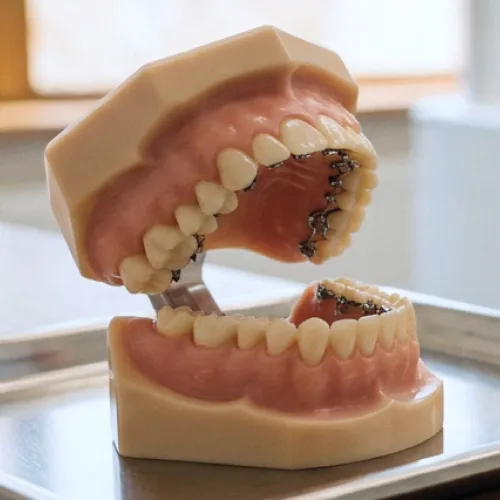
For teens who are responsible enough to wear aligners 20–22 hours daily, the experience typically involves less dietary restriction, easier oral hygiene, and faster adaptation compared to fixed appliances. Parents wondering what to expect during lingual braces treatment in Richmond TX may also find it helpful to compare options before deciding on the best orthodontic path for their teen.
Across the age spectrum, Invisalign offers consistent advantages worth understanding clearly.
Oral hygiene stays manageable. Fixed braces create retention areas for plaque around brackets and wires. Removable aligners let patients brush and floss normally. WebMD's guide on straightening teeth as an older adult highlights this as a particular benefit for adults who already have restorative work or gum sensitivity.
Discretion during treatment. The trays are nearly invisible during daily interactions — a meaningful quality-of-life consideration for professionals and teens alike who prefer not to draw attention to their orthodontic treatment. Patients interested in a broader range of smile improvements may also want to explore aesthetic dentistry options that can complement aligner treatment.
Predictable digital planning. The ClinCheck software maps out every tooth movement before a single tray is made. Patients can see a projected outcome before committing, and clinicians can refine the plan with precision.
Comparable long-term outcomes to braces. For mild to moderate cases, research consistently shows that Invisalign achieves alignment results comparable to dental braces, though treatment timelines may be modestly longer depending on case complexity.
The most important factor across every age group remains compliance. Aligners worn fewer than 20 hours daily simply don't deliver results on schedule — and no amount of engineering fully compensates for consistent non-wear. Patients who want to understand more about the refinement process can learn when refinements are needed with Invisalign trays in Richmond TX to set realistic expectations for their treatment journey.
Whether you're an adult considering your options for the first time, a parent weighing Invisalign Teen against traditional braces, or navigating a more complex dental history, the right starting point is an honest conversation with an experienced provider.
Nu Dentistry Richmond serves patients throughout Richmond and the greater Houston area. Our team evaluates candidacy carefully — including factors like bone health, existing restorations, and compliance readiness — so your treatment plan reflects your actual situation, not a generic template. Reach out to contact us to schedule a consultation and find out whether Invisalign is the right fit for you or your child.
Medical disclaimer: This article is for informational purposes only and does not constitute medical or dental advice. Always consult a licensed dental professional for diagnosis and treatment recommendations specific to your situation.

Tuesday 9-6pm
Thursday 9-6pm
Saturday 9-2pm
11115 W Grand Parkway S, Suite 140, Richmond, TX 77407
5706 San Felipe St Ste B-300, Houston, TX 77057
23227 Gosling Rd., Suite B, Spring, TX 77389
8940 Barker Cypress Rd., Cypress, TX 77433
3201 N. Shepherd Dr. Suite 113, Houston, TX 77018
8145 Highway 6, Building B #200, Missouri City, TX 77459
PATIENT TESTIMONIALS Richmond, TX
What People Are Saying After Visiting Us

CARING DENTISTS Richmond, TX
OUR SOCIALS
Check Us Out and Follow Our Social Media Accounts